
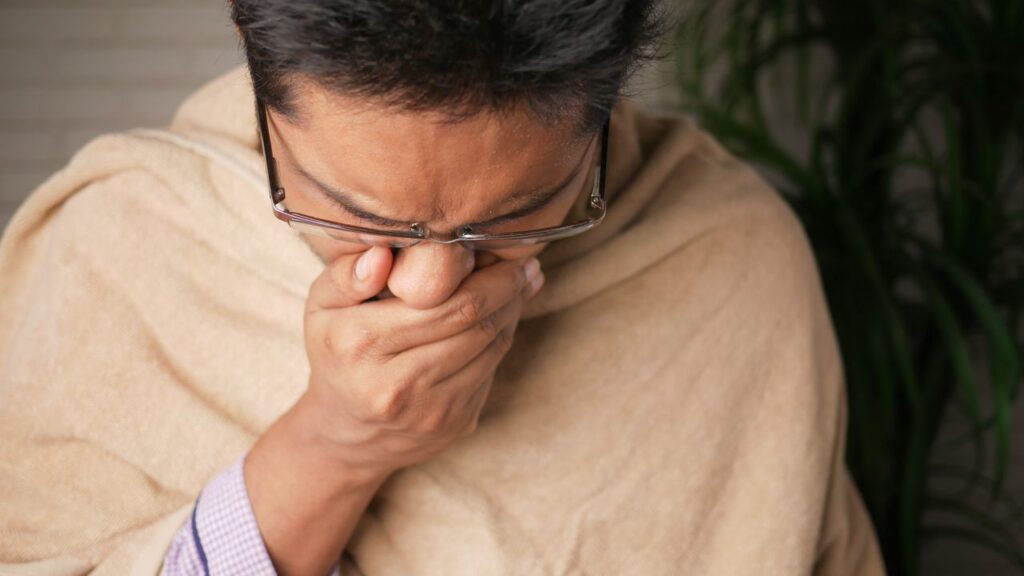
Bronchitis vs pneumonia comes down to where the trouble sits in your chest. Bronchitis inflames the airways, while pneumonia is an infection deep in the lungs. Both cause a cough, so you often cannot tell them apart at home. Here is how they differ, who is at higher risk, and when to get checked.
Quick answer
What is the difference between bronchitis and pneumonia?
Bronchitis inflames the airways (bronchial tubes), while pneumonia is a lung infection that fills the air sacs with fluid or pus. Both cause cough and fever, so symptoms alone rarely settle it. Bronchitis fever is usually low; pneumonia can bring chills and lower your oxygen. An exam, often with a chest X-ray, tells them apart.
Call 911 or go to the ER if…
- Anyone: trouble breathing that comes on suddenly or makes it hard to talk.
- Anyone: a person stops breathing.
- Children: struggling for each breath, or can barely speak or cry.
- Children: lips or face look bluish when not coughing.
- Children: ribs pulling in with each breath, or not alert when awake.
These lists from MedlinePlus and the American Academy of Pediatrics are not complete.

Bronchitis vs pneumonia: what’s the difference?
The difference is location. The NHLBI describes bronchitis as inflammation of the bronchial tubes, the airways that carry air into your lungs. That swelling brings coughing and mucus.
Pneumonia goes further in. The NHLBI calls it an infection in one or both lungs that makes the tiny air sacs, called alveoli, fill with fluid or pus. Its symptoms can range from mild to serious.
Most short-term bronchitis is a “chest cold.” The CDC says viruses usually cause it. Pneumonia has more possible causes. The CDC names bacteria and viruses as the common ones, and says providers cannot always tell which germ is responsible.

Symptoms side by side
The two share a lot. Each row below comes from the CDC, the NHLBI or MedlinePlus.
| Feature | Acute bronchitis | Pneumonia |
|---|---|---|
| Where it is | Airways (bronchial tubes) | Air sacs in the lungs |
| Usual cause | Viruses | Bacteria or viruses |
| Fever | Usually low, below 100.4°F | Fever, often with chills |
| Breathing | Shortness of breath, wheezing | Shortness of breath, low oxygen |
| Chest pain | Chest discomfort | Pain when you breathe or cough |
| How long | Usually under 3 weeks | Most improve within 2 weeks with treatment |
Bronchitis can still leave a nagging cough. MedlinePlus says a dry cough can linger for 1 to 4 weeks after the illness clears. If yours keeps going, read about when a cough that hangs on needs a doctor.

Can bronchitis turn into pneumonia?
A chest illness can get worse, and that is the moment to act. The NHLBI says bacterial pneumonia can develop on its own or after a cold or the flu.
The warning sign is the pattern. MedlinePlus lists symptoms that get worse after first getting better as a reason to contact a provider. Other signs are rust-colored or bloody mucus and breathing that keeps getting harder. If you started with the flu, see when flu symptoms mean it is time to see a doctor.
What about walking pneumonia?
Walking pneumonia is a milder form of pneumonia, not a type of bronchitis. The NHLBI links it to a germ called Mycoplasma pneumoniae. It is still pneumonia, so the same reasons to get checked apply.

Pneumonia can look different in older adults and babies
The NHLBI says older adults and people with weak immune systems may not have typical symptoms. Instead of a fever, they may have a lower-than-normal temperature. Older adults may also feel weak or suddenly confused, and the CDC lists confusion among pneumonia symptoms.
Babies may vomit, have a fever and cough, or seem restless or low on energy. The NHLBI lists these signs of breathing problems in babies:
- Fast breathing
- Grunting
- Muscles between the ribs pulling in with each breath
- Nostrils widening with each breath
- A bluish tone to the skin and lips
For a sick child with fever, see when a child’s fever needs a call to the doctor.

Who is at higher risk for pneumonia?
The CDC lists these groups at higher risk:
- Adults 65 and older
- Children younger than 5
- People with ongoing heart, liver or lung disease, or diabetes
- People with a weakened immune system
- People who smoke or drink heavily
MedlinePlus says flu, pneumococcal and COVID-19 vaccines may help prevent some types of pneumonia. Our immunizations page covers vaccines.

When to get checked
Most chest colds get better on their own, but some signs mean you should be seen. The CDC’s chest cold basics and MedlinePlus point to these:
| What you notice | What to do |
|---|---|
| Fever over 5 days, or 104°F or higher | See a provider |
| Bloody or rust-colored mucus | See a provider |
| Shortness of breath or chest pain | See a provider soon |
| Better, then worse again | See a provider |
| Cough past 3 weeks, or bronchitis that keeps returning | See a provider |
| Baby under 3 months with 100.4°F or higher | Get care promptly |
Have heart or lung disease? MedlinePlus says to contact your provider about acute bronchitis too. For other symptoms, see symptoms that mean you should be seen. See our guide to deciding between your family doctor, urgent care or the ER.
How doctors tell them apart
A provider asks about your symptoms, health history, smoking and vaccines, then listens to your chest with a stethoscope. MedlinePlus says crackles or abnormal breath sounds can point to pneumonia. A small clip on your finger, called a pulse oximeter, estimates the oxygen in your blood.
Do you need a chest X-ray?
Not always, but it is the main tool when pneumonia is a question. The NHLBI explains how pneumonia is diagnosed: a chest X-ray is often used, and a blood count can show your body is fighting an infection.
Frequently asked questions
Can bronchitis turn into pneumonia?
A chest illness can be followed by pneumonia. The NHLBI says bacterial pneumonia can develop on its own or after a cold or the flu. MedlinePlus lists getting worse after first getting better as a reason to contact a provider, along with rust-colored mucus and harder breathing.
How do doctors tell bronchitis from pneumonia?
They start with your history and listen to your lungs with a stethoscope, checking for crackles. A pulse oximeter checks your oxygen. If pneumonia is suspected, MedlinePlus says your provider will likely order a chest X-ray. The NHLBI adds that blood tests may help.
Does bronchitis need antibiotics?
Usually not. The CDC says viruses usually cause chest colds, and that antibiotics are not recommended and will not help you feel better. MedlinePlus says most people do not need antibiotics for acute bronchitis caused by a virus. Your provider decides what fits your illness.
How long does acute bronchitis last?
The CDC says chest cold symptoms last less than 3 weeks, and the NHLBI says acute cases clear on their own after 2 to 3 weeks. MedlinePlus notes a nagging cough can last 1 to 4 weeks after. A cough past 3 weeks is a reason to be seen.
Not sure if you should be seen?
If your fever is high, your breathing is harder, or you got better and then worse, contact our office and describe your symptoms.
To compare other respiratory illnesses, see cold, flu and COVID-19 symptoms side by side.
Sources
- Centers for Disease Control and Prevention, “Chest Cold (Acute Bronchitis) Basics,” checked November 18, 2026.
- Centers for Disease Control and Prevention, “About Pneumonia,” checked November 18, 2026.
- Centers for Disease Control and Prevention, “Risk Factors for Pneumonia,” checked November 18, 2026.
- National Heart, Lung, and Blood Institute, “Bronchitis,” checked November 18, 2026.
- National Heart, Lung, and Blood Institute, “Pneumonia” (overview, symptoms, causes and diagnosis pages), checked November 18, 2026.
- MedlinePlus (National Library of Medicine), “Acute bronchitis,” checked November 18, 2026.
- MedlinePlus, “Community-acquired pneumonia in adults,” checked November 18, 2026.
- MedlinePlus, “Breathing difficulty” and “Cough,” checked November 18, 2026.
- American Academy of Pediatrics, HealthyChildren.org, “Cough” symptom checker, checked November 18, 2026.
This article is general health information, not medical advice, and does not replace a visit. If you think you have an emergency, call 911. For questions about your own health, contact your doctor’s office.