
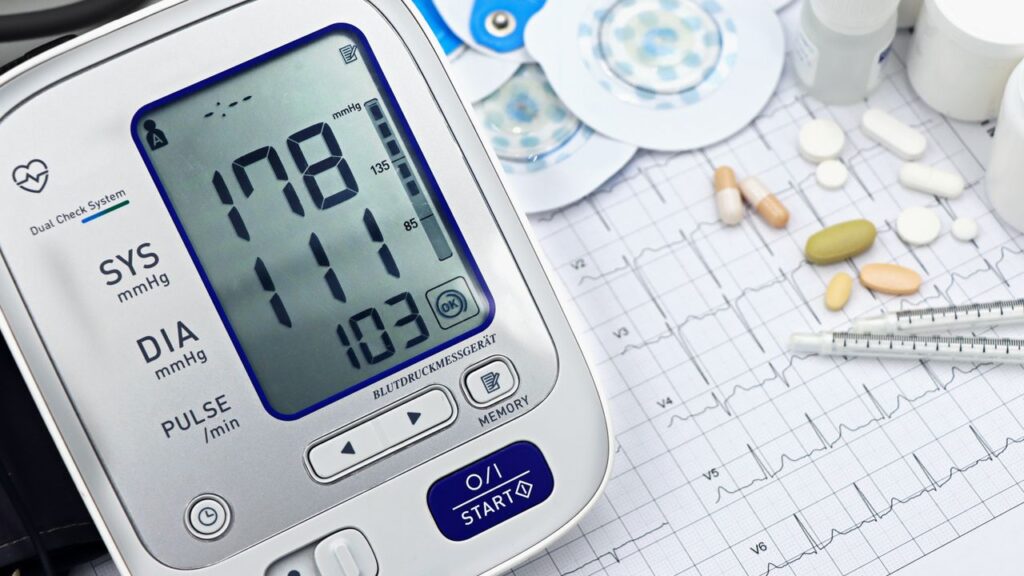
The DOT physical blood pressure requirements come in two layers: a short federal rule with no numbers, and FMCSA guidance that gives examiners the numbers. The rule, 49 CFR 391.41(b)(6), says a driver must have no current diagnosis of high blood pressure likely to interfere with safe driving. The guidance ties readings to card length.
Quick answer
What are the DOT physical blood pressure requirements?
The federal rule sets no number. It bars high blood pressure likely to interfere with safe driving. FMCSA guidance for examiners adds the numbers: 140/90 or lower is the usual goal, readings above 140/90 may mean a shorter card, and a reading at or above 180/110 means no certificate until it comes down.

What the regulation actually says
Here is the full blood pressure standard in 49 CFR 391.41(b)(6), as the Electronic Code of Federal Regulations showed it in September 2026. A driver is physically qualified if that person “has no current clinical diagnosis of high blood pressure likely to interfere with his/her ability to operate a commercial motor vehicle safely.”
The rule names no cutoff or card length. Those details come from FMCSA’s Medical Advisory Criteria, which are printed in Appendix A to Part 391 and repeated in the Medical Examiner’s Handbook 2024 Edition.
Good to know: FMCSA’s handbook says its guidance does not have the force and effect of law. Examiners may choose whether to use it, and the certified medical examiner makes the final decision.

DOT physical blood pressure requirements by stage
The handbook says an elevated finding should be confirmed by at least two more measurements. It says high blood pressure alone is unlikely to affect safe driving, but the risk rises with organ damage, especially to the brain’s blood vessels.
| FMCSA stage | Reading | What the guidance suggests |
|---|---|---|
| Stage 1 | 140 to 159 top number, or 90 to 99 bottom number | May be certified for 1 year; later exams should be 140/90 or lower |
| Stage 2 | 160 to 179, or 100 to 109 | One-time 3-month certificate to get it to 140/90 or lower; then 1 year |
| Stage 3 | 180/110 or higher | Not certified, even briefly, until 140/90 or lower; then 6 months at a time |
| Severity unknown | Already treated, starting level not known | Yearly certification recommended |
For Stage 1, if a later exam shows above 140/90 but below 160/100, the guidance allows a one-time 3-month certificate. Your examiner decides what fits you.
Why FMCSA stages differ from your doctor’s chart
The handbook says FMCSA’s stages come from a 2002 FMCSA panel that adopted a national report from 1997. Today’s chart from the National Heart, Lung, and Blood Institute (NHLBI), updated June 2025, uses lower numbers.
| Label | FMCSA guidance | NHLBI (2025) |
|---|---|---|
| Stage 1 | 140 to 159 or 90 to 99 | 130 to 139 or 80 to 89 |
| Stage 2 | 160 to 179 or 100 to 109 | 140 or higher, or 90 or higher |
| Stage 3 | 180/110 or higher | No stage 3 category |
So a reading your doctor calls stage 1 may sit below FMCSA’s Stage 1 range. For background, see what a reading of 130 over 80 means.

How your blood pressure is checked at the exam
Blood pressure is one of the tests in each step of a DOT physical. The handbook says exam readings should be used for the decision. A reading above 139/89 should be confirmed later in the same exam and written in the “second reading” space on the exam form, MCSA-5875.
MedlinePlus says many people have higher readings at a provider’s office than at home, and this is called white coat hypertension. NHLBI also describes the opposite, masked hypertension, where office readings are lower than readings taken elsewhere. Learn more about why home and office blood pressure readings differ.
MedlinePlus gives simple tips for any blood pressure check:
- Rest for at least 5 minutes before the reading; 10 is better
- Avoid caffeine, tobacco, a meal or exercise in the 30 minutes before
- Sit with your arm supported so your upper arm is at heart level

Blood pressure medicine and the DOT physical
Taking blood pressure medicine is not a disqualifier under the rule. The handbook says most of these medicines can have side effects, such as sleepiness or fainting, and examiners weigh them one driver at a time.
Bring a full list of your medicines. FMCSA also offers an optional form, the 391.41 CMV Driver Medication Form, MCSA-5895, that an examiner may use to ask your prescriber about your medicines. Never stop or change a medicine to get through the exam: talk with your own doctor first. See what to bring to a DOT physical.

What happens if your reading is high
A high reading does not always mean no certificate. Under the guidance, Stage 1 or Stage 2 readings may still lead to a shorter card, such as 1 year or 3 months.
Read how long a DOT medical card lasts, and if the examiner does not certify you, see what happens if you fail or are deferred at a DOT physical. Blood pressure is one of 13 standards; the full list of FMCSA standards that can disqualify a driver covers the rest.

Getting ready with your own doctor
NHLBI says diagnosing high blood pressure takes two or more readings at separate appointments, and home readings need an approved device. If your numbers have been high, a regular visit before your DOT physical lets your family doctor recheck them and review your home readings. The DOT decision still belongs to the certified examiner.
Frequently asked questions
What is the highest blood pressure allowed for a DOT physical?
The federal rule sets no number. FMCSA guidance says a driver with a reading at or above 180/110 should not be certified, even for a short time, until it is 140/90 or lower and treatment is well tolerated. Only your examiner decides.
Will high blood pressure get me a 1-year card?
It may. FMCSA guidance says a driver with Stage 1 readings, 140 to 159 over 90 to 99, may be certified for 1 year. A driver with Stage 2 readings may get a one-time 3-month card first. Only your certified examiner decides your card length.
Can I bring my home blood pressure readings?
You can bring them, but FMCSA’s handbook says readings taken during the exam should be used for the certification decision. NHLBI says comparing office and home readings helps your own doctor spot white coat or masked hypertension, so share them at regular visits.
Does taking blood pressure medicine disqualify me?
No rule bars blood pressure medicine. FMCSA’s handbook says examiners look at possible side effects, such as sleepiness or fainting, one driver at a time. Bring a full medicine list, and never stop one without talking with your doctor.
What happens after a 3-month DOT card?
Under FMCSA guidance, a Stage 2 driver given a one-time 3-month card may be certified for 1 year if treatment is well tolerated and the reading is 140/90 or lower. FMCSA allows no grace period, so plan ahead.
Worried about your blood pressure before a DOT physical?
A regular visit can help you understand your numbers and your health well before exam day. Contact our office to ask about a blood pressure check or your records.
If you also manage blood sugar, read how a DOT physical works with diabetes.
Sources
- Code of Federal Regulations, 49 CFR 391.41, “Physical qualifications for drivers” (eCFR, up to date as of September 29, 2026), checked November 21, 2026.
- Federal Motor Carrier Safety Administration, “Medical Examiner’s Handbook 2024 Edition,” checked November 21, 2026.
- Federal Motor Carrier Safety Administration, “391.41 CMV Driver Medication Form, MCSA-5895 (optional),” checked November 21, 2026.
- National Heart, Lung, and Blood Institute, “High Blood Pressure: Diagnosis,” checked November 21, 2026.
- MedlinePlus, “Blood pressure measurement,” checked November 21, 2026.
This article is general health information, not medical advice, and does not replace a visit. If you think you have an emergency, call 911. For questions about your own health, contact your doctor’s office.