
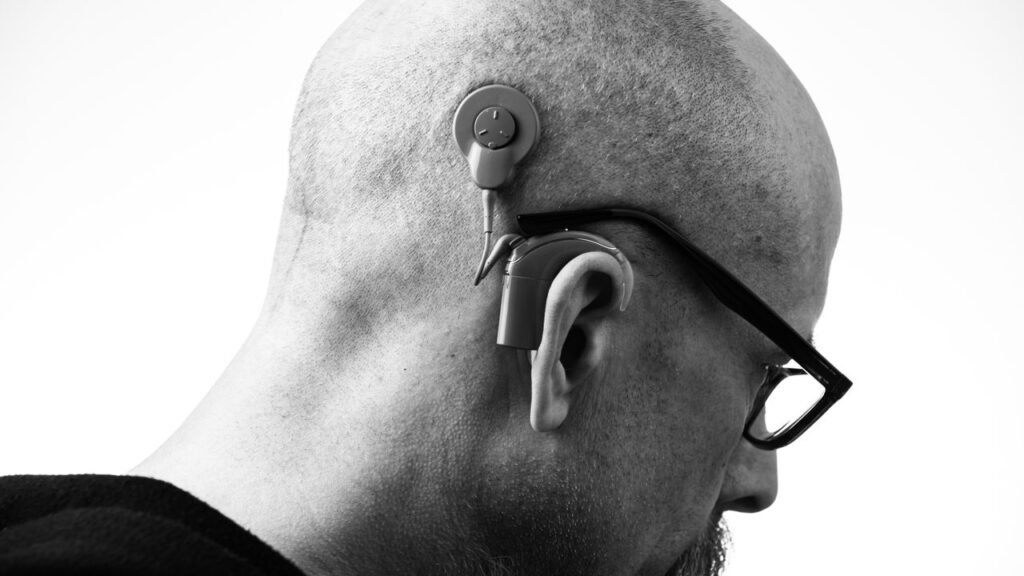
The DOT physical hearing test usually starts with a forced whisper, and only your better ear has to meet the federal standard. FMCSA’s Medical Examiner’s Handbook (2024 Edition) says you can use a hearing aid, as long as you then wear it while driving.
Quick answer
What is the hearing requirement for a DOT physical?
Under 49 CFR 391.41(b)(11), you must first hear a forced whispered voice in your better ear at not less than 5 feet, with or without a hearing aid. On an audiometer, the average loss in your better ear at 500, 1,000 and 2,000 Hz cannot exceed 40 decibels.
What the FMCSA hearing standard says
The rule is one sentence in 49 CFR 391.41(b)(11). A driver must first perceive “a forced whispered voice in the better ear at not less than 5 feet with or without the use of a hearing aid.” Or, on an audiometric device, the average hearing loss in the better ear must not be greater than 40 decibels at 500, 1,000 and 2,000 Hz.
The regulation names an older audiometer calibration standard, and the handbook tells examiners how to convert results from the newer ISO standard.
| Route | How it works | What FMCSA says |
|---|---|---|
| Forced whisper test | Examiner whispers from at least 5 feet | Better ear must hear it |
| Audiometry | Hearing measured at 500, 1,000 and 2,000 Hz | Better ear average no worse than 40 decibels |
| With a hearing aid or implant | Either test, wearing the device | Must wear it while driving |
| Federal hearing exemption | Driver applies to FMCSA | Interstate drivers only; FMCSA decides |
How the DOT physical hearing test works
FMCSA’s handbook lays out the whisper test in its medical advisory criteria.
- You stand or sit at least 5 feet from the examiner, with the ear being tested turned toward them.
- Your other ear is covered.
- Using the breath left after a normal exhale, the examiner whispers words or random numbers, such as 66, 18 or 3.
- You repeat what you heard.
- The other ear is tested the same way.
Examiners should not use only “s” sounds. Both ears must be tested, but only the better ear has to meet the standard. If you fail the whisper test in both ears, the next step is an audiometric test.
For the rest of the visit, read what happens at each step of a DOT physical.

What happens if you do not hear the whisper?
The handbook says a driver who fails the whisper test in both ears, including someone who wears a hearing aid or has a cochlear implant, should be referred to an audiologist or hearing aid center for audiometric testing. FMCSA guidance issued April 1, 2014 adds that office audiometry cannot test a person wearing a hearing aid.
For audiometry, the handbook says the examiner averages each ear’s readings at those three tones, which are typical of normal conversation, without rounding.
When an audiologist does the test, the handbook asks for a signed, dated report with the audiologist’s license details. The examiner records the results on the Medical Examination Report Form, MCSA-5875.
Good to know: If you fail the screening, the handbook says you may see a specialist and then have a new physical qualification exam. The examiner must not put you in “determination pending” status while you wait for that consultation.
For more on outcomes, see what happens after a failed or deferred DOT physical.
Can you pass a DOT physical with hearing aids?
The regulation allows the standard to be met “with or without the use of a hearing aid.” The handbook says someone with a hearing aid or cochlear implant can be qualified as long as they meet the standard. If you need the hearing aid to meet it, you must use it while driving.
In that case the examiner checks the “Wearing hearing aid” box on the MCSA-5875 and on the Medical Examiner’s Certificate, Form MCSA-5876. Bring the hearing aids you drive with to the exam. Our checklist of what to bring to a DOT physical covers the other items.

The FMCSA hearing exemption
If you cannot meet the standard even with hearing aids, FMCSA has a Federal hearing exemption. The handbook says examiners cannot issue exemptions; only FMCSA can.
FMCSA’s Driver Exemptions page says all its exemptions are for drivers who operate in interstate commerce. FMCSA has no authority over a state’s intrastate rules. If you drive only within Illinois, check with the Illinois Secretary of State.
FMCSA’s application (updated July 8, 2024) asks for:
- A statement with your details, your vehicle and confirmation that you drive interstate
- A copy of your driver’s license, front and back
- A signed medical release form
- Your driving record for the last 3 years, dated within 3 months of applying
- A Medical Examiner’s Certificate, MCSA-5876, showing a hearing exemption is required
FMCSA takes 30 days of public comment through the Federal Register and says it makes a final decision within 180 days of a completed application. The handbook says a certificate marked as needing an exemption is not valid until FMCSA issues it.
Hearing changes worth raising before your exam
The National Institute on Deafness and Other Communication Disorders (NIDCD) says long or repeated exposure to sound at or above 85 dBA can cause noise-induced hearing loss, the only type that is completely preventable.
NIDCD lists signs such as muffled sounds, trouble understanding speech in noisy places and ringing in the ears. If you notice these, talk with your doctor before your exam date. You can also check whether you need a referral to see a specialist such as an audiologist.
Frequently asked questions
How is hearing tested on a DOT physical?
Usually with a forced whisper test from at least 5 feet, one ear at a time, with the other ear covered. FMCSA’s handbook says an audiometric test is used if you do not hear the whisper in either ear.
Can you pass a DOT physical with hearing aids?
The regulation lets drivers meet the hearing standard with or without a hearing aid. If you need the aid to meet it, FMCSA’s handbook says you must use it while driving, and the examiner marks it on your forms.
Can you get a CDL if you are deaf in one ear?
FMCSA’s handbook says both ears are tested, but only the better ear has to meet the standard. So hearing loss in one ear does not by itself decide the result. The certified medical examiner makes the decision.
What happens if you fail the DOT hearing test?
FMCSA’s handbook says you may see a specialist, such as an audiologist, and then have a new exam. If you cannot meet the standard even with hearing aids, interstate drivers may apply to FMCSA for a Federal hearing exemption.
Is there a hearing waiver for CDL drivers?
FMCSA offers a Federal hearing exemption for interstate drivers who cannot meet the hearing standard. You apply to FMCSA, not the examiner, and FMCSA says it decides within 180 days of a completed application. Intrastate drivers should check with their state.
Noticing changes in your hearing?
Muffled sounds or ringing ears are worth checking with your own doctor. Contact our office to ask about a regular visit or your records.
Next, see the full list of FMCSA physical standards for drivers, including sleep apnea and vision.
Sources
- Code of Federal Regulations, 49 CFR 391.41, “Physical qualifications for drivers” (2025 edition), checked November 21, 2026.
- Federal Motor Carrier Safety Administration, “Medical Examiner’s Handbook 2024 Edition,” sections 1.7, 4.5 and 7.1.1, checked November 21, 2026.
- Federal Motor Carrier Safety Administration, “Section 391.41(b)(11): Driver Safety and Health, Medical Requirements” (audiometry guidance, April 1, 2014), checked November 21, 2026.
- Federal Motor Carrier Safety Administration, “Driver Exemptions,” checked November 21, 2026.
- Federal Motor Carrier Safety Administration, “Federal Hearing Exemption Application,” checked November 21, 2026.
- National Institute on Deafness and Other Communication Disorders, “Noise-Induced Hearing Loss” and “Hearing Aids,” checked November 21, 2026.
This article is general health information, not medical advice, and does not replace a visit. If you think you have an emergency, call 911. For questions about your own health, contact your doctor’s office.